Showing posts with label money. Show all posts

Monday, September 22, 2008

In Praise of the Artist

In Praise of the Artist - Nemo vir est qui mundum non reddat meliorem.

A buddy of mine just moved into his first house, and over beers he talked about all the little projects he'd been working on - assembling furniture, fixing bath fixtures, generally building or improving little things around his home. All those projects you got to help your father with as a kid, he gets to do on his own for the first time. We talked about how rewarding it feels to successfully to complete things like this - to acquire tools and materials, the resources around you - then to add the most important piece, your own labor. To stand back and look at the fruits of your efforts and say, before my work, my input, this creation didn't exist. And now, because of its existence, the world (that I've defined) is better than it used to be.

The latin quote for the title literally translates - A man is nobody, who does not give back a better world. You cant get all kinds of eloquent with the meaning, in Kingdom of Heaven (a hugely underrated movie) Orlando Bloom as Bailin of Ibelin says it's "What man is a man, who does not make the world a better place?" As we begin to enter a period of financial instability that my generation has never seen anything close to, the importance of this sentiment rings truer than ever if we don't want this sort of thing to happen again. As tons of college sophomores switch their majors from finance and econ to marketing and basket-weaving, we'll have to rethink a lot of our old assumptions. And so many more recent graduates will fall into this fallacy. I'm not advocating quitting every business job and reverting to some fuedal, hippie-style, greenpeace, screw technology, self-sustaining farmland nonsense existence. Rational self-interest is still the most important virtue or ideal you can pursue, but it has to create some sort of world utility that's bigger than yourself. Ask yourself if what you're doing is really the work you owe the world. If it's not, figure out what's wrong, understand why, and work to change it. It really is that simple.

Artists and engineers, they figured out all of this much more quickly than the rest of us. Da Vinci was a total badass. Throughout history, every positivie cultural, technological, or physical improvements have come from giving in to this innate calling. Nearly every technological innovation we now utilize and often take for granted came about because some entreprenuer acted in his own self-interest. The fact that society gained some utility from it and he got paid off is merely a nice and well-deserved corrollary. The desire to create and improve is innate - everyone feels it. The greatest tragedy, is going through your entire life having fully given into the Resistance, and never proffering the world whatever creativity you have inside. Do your work and add value to the world. Anything else you might want; family, fame, money, power, women, whatever, all that will follow accordingly.

Sunday, August 24, 2008

Stringer Bell, Chicago School of Economics

Adam Smith called smugglers heroes - men who sought to offer the price of their goods without any added expenses for whatever regulating body tried to get involved. Less costly from the supplier, less expensive for the buyer, and therefore more goods to be bought and sold at a fair price for all parties included. With no middlemen (who don't add any value) creating useless additional costs, the smuggler offers the truest and fairest price of a good or service.

All throughout the hit show the Wire, Stringer remains the most business smart, calculating man in the series. A’s on his microeconomic courses, likens himself to a CEO, discusses markets and strategy with his professors, has to explain shit all the time to his subordinates. Even after his death, McNulty finds a copy of A Inquiry into the Nature and Causes of the Wealth of Nations. But the coolest part, is his true adherence to principles of the Chicago school. Straight up, no bullshit, neoclassical, conservative, Chicago school econ. (The conventional definition of conservative, not Milton's. Friedman, accurately, always called himself a liberal.) While he’s had no remorse in eliminating business threats through violent means (hostile takeovers,) after his empirical analysis, he does generally shift toward a total Laissez–Faire, market-forces-only operation during the co-op period with Proposition Joe. He tries to use those increased profits to look into some legitimate business deals under the direction of the senator Clay Davis, but sheeeeeeeeeeeeeit, he becomes frustrated with the highly regulated, bureaucratic process of these legit ventures. Lo and behold, he gets hoodwinked by a corrupt politician. (Every conservative economist's nightmare.)

On the streets, interestingly enough, the blood-thirsty, bellicose, power-hungry Avon Barksdale is actually the liberal, in favor of larger government, increased regulations (by his own weapons and ferocity) that fuck up natural market forces. Avon's interference with the market equilibrium destroys value, when there’d actually be larger real societal gains (more drugs and money for all) if he left it alone.

But still, ya know, drugs are bad.

Thursday, August 21, 2008

Guy Ritchie Called, He Wants His Soul Back

Guy Ritchie: "Hey Ryan, it's Guy."

Ryan: "Fuck you. What do you want, guy?"

Guy Ritchie: "Did you just call me 'guy?' Like, lowercase?"

Ryan: "Yeah I did, buddy."

Guy Ritchie: "I'm not your buddy, friend."

Ryan: "I'm not your friend, jackass, and I'm hanging up now."

Guy Ritchie: "Wait. I'm sorry."

Ryan: "For what? Marrying Madonna? Revolver? Swept Away? All the ways in which you've squandered your artistic gifts since 2001?"

Guy Ritchie: "Right. All of those."

Ryan: "Cause you know she's fucking A-Rod right now, right?"

Guy Ritchie: "Right. Yeah I know. But, I wanted to say..."

Ryan: "Like she had talent when she sang 'Crazy for You' in Vision Quest. But that four minutes shit with Justin Timberlake? Seriously dude, are you just like on a huge bender and have permanent beer goggles..."

[audible stifled beer tears]

Guy Ritchie: "Yes. Look man, I'm sorry, but I'm here to make amends."

Ryan: "Go on."

Guy Ritchie: "Well I wrote and directed a movie and it's pretty great. I realized I need to get some real pussy again, so I decided to create some real art."

Ryan: "Word. Good to hear. Statham? Some women?"

Guy Ritchie: "Nope. Fuck Statham, he's old news. And yeah, the women are gorgeous - the chick from MI-2 and Crash, and the latest Bond girl. But the main characters are pretty badass."
[finally excited]

Ryan: "Who motherfucker?!"

Guy Ritchie: "Ludacris, Carmine Falcone from Batman, and that skinny dude who looks like a chick in Sweeney Todd."

Ryan: "Fuck y.."

Guy Ritchie: "Oh yeah, also ARI GOLD, KING LEONIDAS, and STRINGER MOTHERFUCKIN' BELL."


FUCK MOTHERFUCKING ROCKNROLLA FUCK AWESOME MOTHERFUCKER- FINALLY-GOT-HIS-SHIT-TOGETHER!

Wednesday, July 16, 2008

The Economics of the Caped Crusader

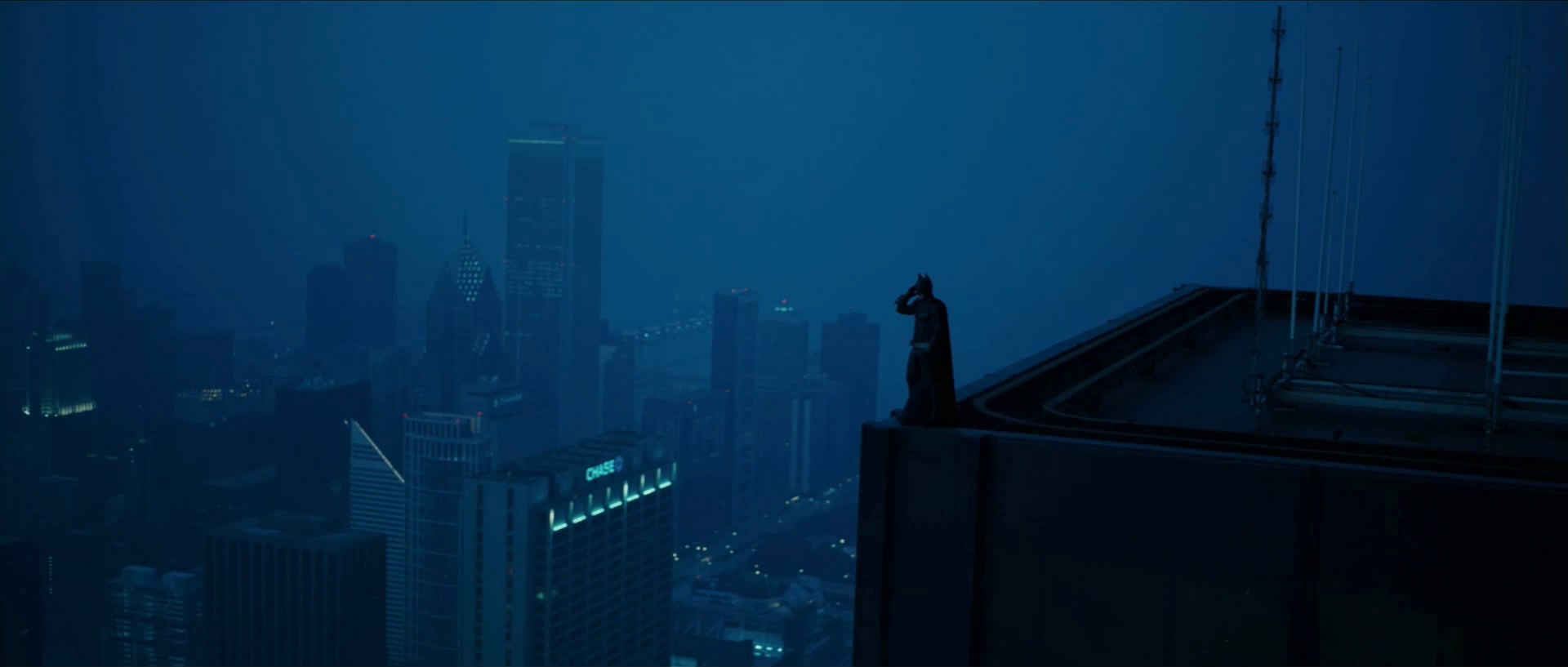
Notice the awesome product placement Chase bank – middle left. Outstanding work, you capitalist whores. (click to enlarge)


Batman - greatest superhero of all time. And don't argue that shit about the X-Men who live in a parallel universe don't fit into our concept of "time." Batman is the greatest superhero of all time, space, and any combination of any other dimensions you want to mention. Everyone knows that he's the only superhero who could reasonably exist in our world - no radioactive spiders, or a sun-enhanced biological makeup, or some fucked up HGH that turns you green. Everything about Batman is entirely reasonable and could occur in our reality. He also happens to be an economist.

The favored definition of economics is Lionel Robbins' "the science which studies human behaviour as a relationship between ends and scarce means which have alternative uses." So what do you do when you're Bruce Wayne and your fortune is more than you could reasonably spend in a lifetime? You simply dedicate your mind and body to perfecting those skills which make you a superhero. He is, in every regard, a pragmatic economist. He efficiently allocates the scarce resources he has available to enhance what he’s determined to be his comparative advantages; ultimately in what manner he deems he can add value to the world. Economists talk about societal gains all the time, where the whole is greater than the sum of its parts. When each entity allocates all its resources to its comparative advantage, the resulting synergy does more for society than if each acted individually. Batman has determined his competitive advantages and plays to them accordingly. A necessary corollary to this is to have effectively defined your own personal value system.

"The only person who can truly persuade you is yourself. You must turn the issues over in your mind at leisure, consider the many arguments, let them simmer, and after a long time turn your preferences into convictions." - Milton Friedman.

He has "Bruce Wayne," his father’s namesake and fortune, to which he models himself as the dimwitted billionaire playboy. While perhaps slightly condemned for his hedonistic lifestyle, he is well-known and praised as one of Gotham's great philanthropists. There are two distinct business/econ thoughts on philanthropy; first the Milton Friedman version that corporations have a responsibility to their shareholders - that money should go right back to the board members and reinvested in the business itself. With the excess money, new jobs and businesses and opportunities can be created, and those provide better long-term societal gains than simply throwing one-time sums of money at people. On the other hand, you have Freeman's stakeholder theory as well as M.E. Porter's competitive advantage of philanthropy; both generally state that excess wealth ought to go back to the surrounding community, aiding in building public works and structures. Porter recommends strategic giving, putting the corporation in a positive light. Say Wayne Enterprises creates a grant or scholarship for aspiring engineers, the hope would be that the recipient get his degree and seeks employment with WE. The stakeholder theory advents corporate responsibility and charity, essentially investments in the surrounding functional communities. Then of course, jackasses like Ted Turner argue that you should do both, donate one-time sums and create new jobs and companies, but the argument is long and boring so read about it somewhere else. Essentially, you could argue that Bruce Wayne is a Keynesian and Batman is of the Chicago School of Economics.

So what do you do when you really have all those resources, and want to spend them on what you believe in? Well, first, you have to clearly understand and define your convictions. The young BW realizes how wrong he was in seeking revenge on his parents' murder, but it took Rachel's slap on the face and his long exile to truly realize his beliefs. So what are they? Well it’s clear that Batman believes in freedom, fairness, opportunity, pursuit of happiness, all that cool shit - founding father’s style. Rights to a fair trial. Incorruptibility – he sees the inherent flaws of the police system and therefore creates the Batman persona as a way to separate himself in his vigilante fashion. He understands the nature of incentives and that most people act in their own self-interest - the very nature of crime. He believes in justice and accountability. When Batman first came about it was in a comic book line called "Detective Series." A detective is an economist whose convictions and values lie in fighting crime, adhering to those principles of justice and all that other shit we mentioned earlier.

Last quick thoughts, the democratic government we (and supposedly Batman) consent to inherently has those checks and balances we learned about in elementary school civics classes - the notion of accountability from different angles being absolutely necessary to arrive at the best solution for the greater good. Unfortunately, this practice is incredibly inefficient. Batman is private sector - he doesn't adhere to those checks and balances, he acts on his own strategy without oversight. And so, growing technology – the true definition of private sector, and a fundamental part of the consumption function (I know it's Keynesian, but it represents the overall health of a nation; the best technological innovation always happens in the private sector)- Batman has in spades better than the gov’t funded police.

One of the fundamental economic problems of cities, specifically regarding crime rates, is limited policing. Guliani is renown for fixing this in New York by greater policing and the CompSTAT system. Batman does the same shit in Gotham - only with his own cash, technology, and ability. Everything about Batman, right down to the very style of his martial arts (whatever crazy form of jiu-jitsu they called it, its based on using agility and your opponent's strength against him rather than brute force,) reflects an exceptional, intuitive understanding of economics. Use your resources effectively, play to your comparative advantages, and do all of it within your defined set of values. And just be a downright badass. Have a lot more to say, but this is a start. Go see "The Dark Knight."

More reading:
Batman Wiki
Stakeholders and Shareholders
Older awesome article likening Batman's crusade to Baghdad - the attraction of lunacy

Sunday, July 13, 2008

Journalism's Fall

I can't help but think back to a paper I wrote my freshman year in journalism class commending W&B for their superior investigative reporting skills without a raw sense of anguish at my naivete. Sure, they brought down the President by exposing the "truth" to the public and government. They sent the country into turmoil, which hadn't even began to recover from the Vietnam crisis, and shook it's faith in the oval office. But they were not detectives, they were scavengers. They fiendishly scrounged off the stupidity of those who were too inept to understand the value in keeping your mouth shut. And their "investigative reporting skills" do not differ or amount to much more than that of a bulk magazine salesman.

Nixon did his best to protect those who were working on his behalf and to better his political career. He was simply taking care of his own. This is not to say Nixon was a great President. It wasn't by coincedence that he was crowned Tricky Dick. Nixon's inconsistencies in Vietnam screwed this country six ways from Sunday. However, morally, he maintained credibility. Nixon should be known as the man who went down without betraying those were loyal to him. And yet he met his political end at the hands of two who were only concerned with climbing the ladder to a Pulitzer, despite the guise of morality they published under.

Locke and Pope would be ashamed. Hearst, the founder of "yellow journalism", would be giddily watching his money pile up. The face of journalism has become uglier since this mid-70s phenomenon. Now journalists and "truth seekers" seem to carry a sense of childish vindication in their articles. They think the system is always broken, the good-natured senator is a criminal because he enjoys women and booze. Let me save you a headline story, everyone has flaws and skeletons in their closet. It is not the job of journalists to habitually beat this point into the ground over and over again. Do your job; report the facts as they are relevant to the public and do not speculate. If this is too great a burden, change your name to Sam Spade, get a detective's license, and stop the charade.

Traditional print is on the way out - losing to weblogs, regular television news is passed over for the Colbert Report and comedians - mainstream media is dead. Mainstream journalism's fall is a good thing - maybe now we can actually get closer to some untempered truth.

Saturday, July 12, 2008

Korea at Night

Below is a really cool satellite image of Korea (North and South) taken at night. It serves as a great visual comparative example of the wealth and health of a nation whose embraced capitalist and democratic policies, with that of a nation without such freedoms. There's hundreds of comparative statistics from population, birth and mortality rates, caloric intake, GNP per capita, and even physical stature of the citizens of each country. (S. Koreans average like half an inch taller than their grass-eating counterparts.)The societal health statistics of the overall South Korean nation absolutely dwarf those of the N. Korea.

You may hear that that tiny speck of light in the North is the nation's capitol of Pyonyang, but we've done our research and discovered that it's actually Kim Jong-Il sitting on a pile of nukes, in a very well-lit room, masturbating to his own reflection - as a string quartet plays The Red Flag.